
Growing families, older children who want their own space, a relative moving in or a need for a home office often lead to the same question: can we add a bedroom without moving house? Often you can, and there are several routes, from simply dividing an existing room to converting the loft or garage.
This guide compares the main options and the rules that apply. FirstR8 Builds carries out stud work and room formations, loft and garage conversions and extensions, and offers a free, no-obligation initial site consultation.
In short
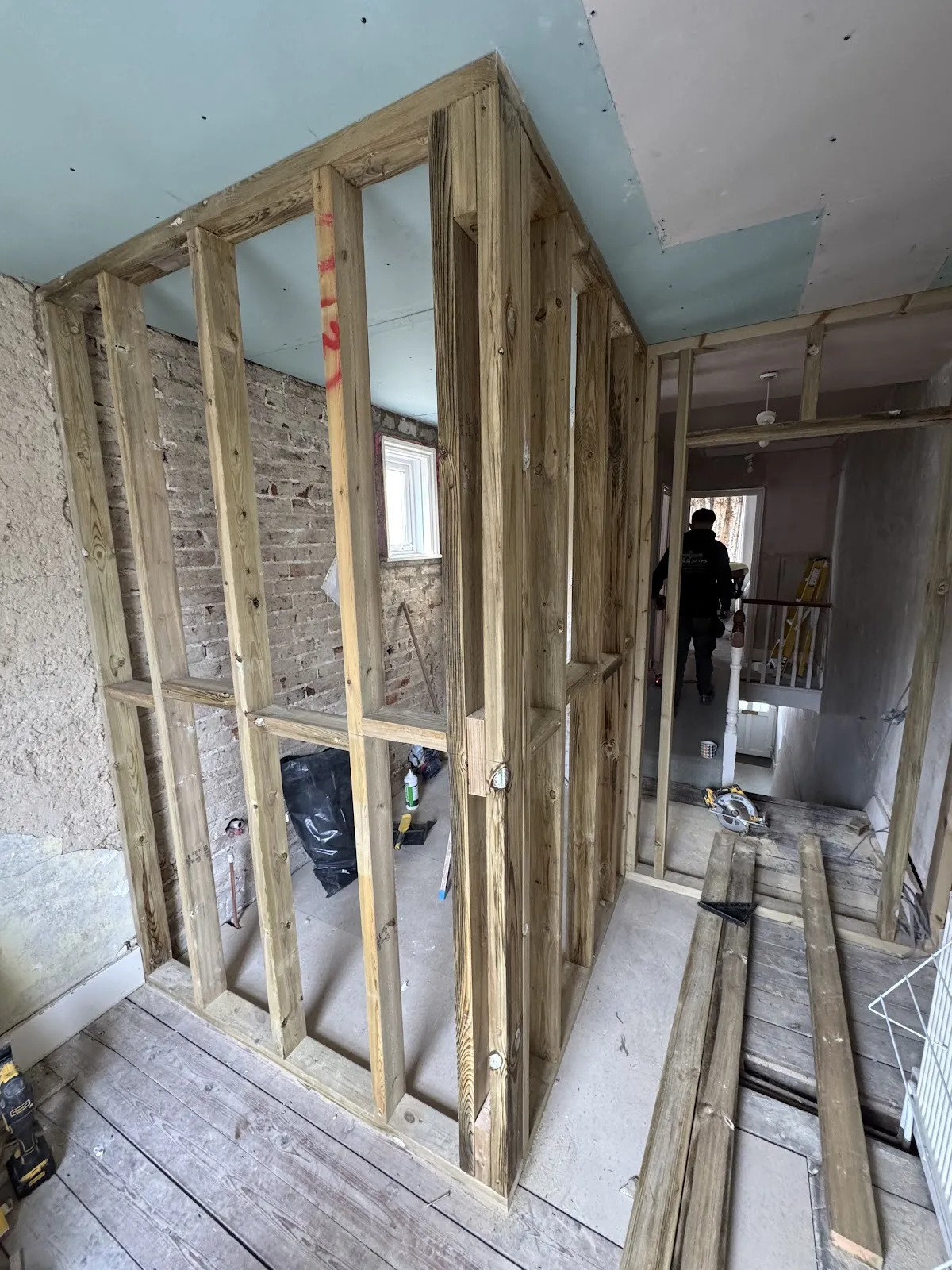
The quickest route is often splitting a large bedroom with a new stud wall, as long as both rooms get a window, a door off a landing or hallway and a sensible size. Bigger gains come from loft conversions, garage conversions and extensions. Every option has rules on light, ventilation, fire escape and sometimes sound and structure.
Option 1: splitting a large room
Many older houses have one large front bedroom that can be divided into two. A timber or metal stud wall is built, insulated for sound, boarded and plastered. The key questions are:
- Does each room have its own window for light and ventilation?
- Can each room have a door off the landing, not through the other room?
- Will both rooms be a usable size with space for a bed and storage?
- Where are radiators, sockets and lights, and do they need moving?
- Does the new wall sit sensibly under ceiling joists?
Light and ventilation
Building Regulations require habitable rooms to have adequate ventilation, normally through an opening window plus background ventilation. A new room without a window is not suitable as a bedroom. Where one room would have no window, a different layout is needed, such as positioning the wall to share a wide window, or adding a new window, which may affect planning and structure.
Fire escape
In most two-storey houses, bedrooms on the first floor are expected to have an escape window, unless there is a protected stair route. New bedrooms created by splitting rooms should follow the same principle. Loft rooms follow different rules. Check with Building Control; our loft conversion fire safety guide covers upper floors.
Sound
A bedroom wall should reduce noise. Insulating the stud wall with acoustic insulation, using sound-resistant plasterboard and sealing gaps helps a lot. Building Regulations sound requirements may apply where a new wall separates bedrooms from other rooms.
Option 2: a loft conversion
A loft conversion can add one or two bedrooms, often with an en suite, without losing garden space. It involves structural work, stairs and fire safety, and the type depends on the roof. Our guides to loft suitability, dormers and rooflight conversions explain the options.
Option 3: a garage conversion
An integral or attached garage can become a ground-floor bedroom, which suits older relatives or teenagers. It needs a new wall in the garage door opening, insulated floors and walls, a window and fire safety measures. Our garage conversion guides explain more.
Option 4: an extension
A two-storey or first-floor extension can add bedrooms, but it is the biggest project and may need planning permission. A single-storey extension can add a ground-floor bedroom, sometimes with a shower room.
Option 5: re-planning the house
Sometimes the answer is to reorganise: moving a bathroom, turning a dining room into a bedroom after a kitchen extension creates a kitchen-diner, or converting a box room into a useful single with built-in storage.
Planning and Building Regulations
Splitting a room or rearranging internal walls usually does not need planning permission. Building Regulations may apply, especially for structural work, fire safety, ventilation and electrics. Loft conversions, garage conversions and extensions have their own requirements.
Storage
New bedrooms are often smaller, so built-in storage matters. Fitted wardrobes in alcoves, bulkheads over stairs or under eaves can make the room work. Our fitted wardrobes page covers this.
What affects the cost
Factors include the route chosen, the amount of structural work, new windows, doors, electrics and heating, fire safety, sound insulation, storage and finishes. Splitting a room is usually the smallest job; extensions are the largest.
Heating and electrics
A new room needs heating, lighting and sockets. Splitting a room often leaves the radiator in one half, so a new radiator or a different heat source may be needed for the other. Light switches and ceiling lights should be planned so each room has its own.
Mistakes to avoid
Avoid creating a room with no window, a bedroom accessed through another bedroom, a wall that blocks a radiator or splits a window awkwardly, and skipping sound insulation. Check that the new rooms will genuinely be usable.
Getting advice
A site visit can quickly tell you which options suit your house. A builder can look at walls, windows, joists and the stair, and talk through whether dividing a room or a bigger project makes sense.
Frequently asked questions
- Can I split a bedroom into two?
- Often yes, with a stud wall, as long as each room gets a window, its own door and a usable size.
- Does a new bedroom need a window?
- Yes. Habitable rooms need adequate light and ventilation, normally through an opening window.
- Do I need planning permission to split a room?
- Usually not for internal walls. Building Regulations may apply to fire safety, ventilation and electrics.
- Is a stud wall soundproof?
- A stud wall with acoustic insulation and suitable plasterboard can reduce noise considerably.
- What is the best way to add a bedroom?
- It depends on your house. Splitting a room is simplest; loft and garage conversions or extensions add more space.