Worktops take more punishment than almost any surface in the house: hot pans, chopping, spills and daily cleaning. They also set the look of a kitchen. Choosing the right material is a balance between appearance, durability, upkeep and budget.
This guide compares the common worktop materials and explains how fitting works. FirstR8 Builds carries out kitchen installations and offers a free, no-obligation initial site consultation.
In short
Laminate is affordable and easy to fit. Solid wood is warm and repairable but needs oiling. Quartz is hard-wearing and low maintenance. Granite is natural and tough but can need sealing. Sintered stone and porcelain are very heat and scratch resistant. Stone and composite tops are templated after base units are fitted, which affects the programme.
Laminate
Laminate worktops are a printed decorative layer bonded to a core, usually chipboard. Modern laminates can look very convincing as wood or stone.
- Pros: affordable, wide choice, easy to cut and fit on site.
- Cons: edges and joints can swell if water gets in; hot pans and knives can damage the surface; hard to repair.
Solid wood
Oak, walnut and other hardwoods give a warm, natural look. Sealing all faces, including the underside and cut-outs, before fitting helps it last.
- Pros: can be sanded and re-oiled to remove marks; cut and fitted on site.
- Cons: needs regular oiling, especially around the sink; can mark from water and heat; moves with humidity.
Quartz
Quartz worktops are engineered from crushed quartz bound with resin.
- Pros: hard, non-porous, consistent colour, low maintenance.
- Cons: can be damaged by very hot pans; professionally templated and installed; heavy.
Granite and natural stone
Granite is a natural stone with unique patterns. Marble is beautiful but softer and more prone to staining and etching, so it suits some homes better than others.
- Pros: very hard, heat resistant, each slab unique.
- Cons: can need sealing; heavy; professionally templated and installed.
Sintered stone and porcelain
These are made by compressing minerals under heat and pressure, producing thin, very hard slabs.
- Pros: highly resistant to heat, scratches and stains; low maintenance.
- Cons: edges can chip if knocked; specialist cutting and installation.
Solid surface
Solid surface materials are acrylic-based and can be joined almost invisibly, with integrated sinks.
- Pros: seamless look, repairable.
- Cons: can scratch and mark from heat.
Templating and fitting
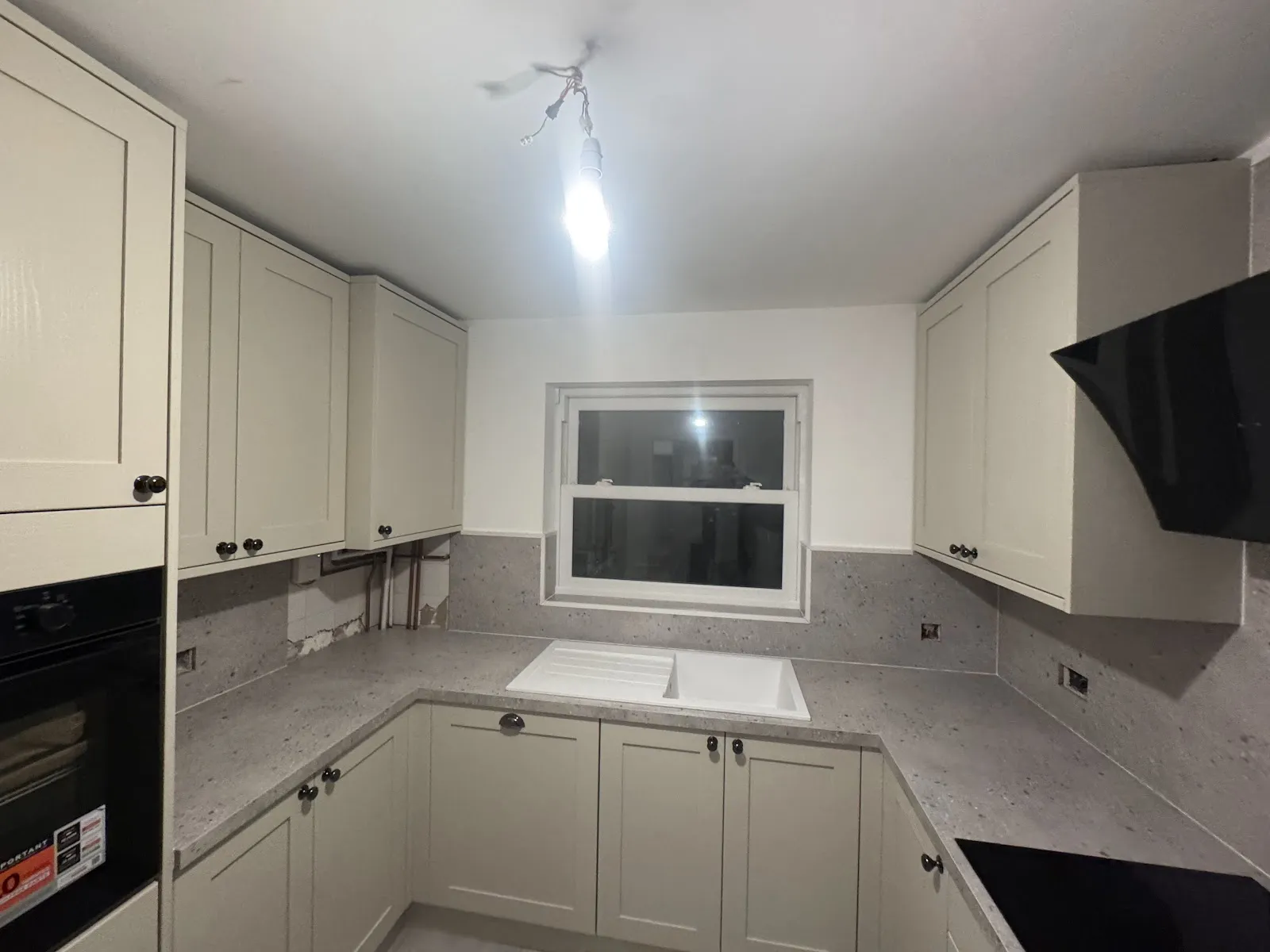
Laminate and wood worktops are usually cut and fitted on site by the kitchen fitter. Stone, quartz and sintered tops are different: the base units are fitted first, then a template is taken, and the tops are made in a workshop before being installed. That means a gap of time between fitting units and tops, so plan the sink and hob connections around it.
Upstands and splashbacks
Upstands made from the same material give a neat finish. Splashbacks behind the hob need to be heat resistant: glass, tiles, stone and some sintered materials are common. Check the hob manufacturer's guidance on clearances.
Details that matter
A few small decisions make a big difference:
- Undermount or inset sink: undermount needs a solid material.
- Drainer grooves cut into stone or quartz.
- Edge profiles, such as square, eased or bevelled.
- Joints: where they fall and how they are finished.
- Overhangs for breakfast bar seating, which may need support.
What affects the cost
The main factors are the material, slab thickness, number of joints and cut-outs, edge detail, upstands and splashbacks, templating and installation, and access. Large islands may need large slabs or extra joints.
Matching the worktop to how you live
Be honest about how the kitchen is used. A busy family kitchen with children, frequent baking and lots of hot pans needs a forgiving, low-maintenance surface such as quartz, granite or sintered stone. Someone who loves the look of timber and does not mind oiling it every few months may be very happy with wood. Laminate suits rentals, utility rooms and tighter budgets, and modern ranges can look very good. Some people mix materials, for example a stone run around the sink and hob with a timber island top for warmth. Look at large samples in your own light, alongside your door colour and flooring, before deciding.
Caring for your worktops
Whatever you choose, follow the manufacturer's care guidance. Use chopping boards rather than cutting directly on the surface, trivets for hot pans and avoid harsh cleaners on stone and wood. Wipe spills, particularly wine, oil and lemon juice, promptly. Re-seal natural stone and re-oil timber as recommended. Good care keeps the guarantee from the supplier valid and keeps the surface looking new for longer.
Mistakes to avoid
Avoid choosing a material that does not suit your habits, forgetting that stone tops need templating time, using laminate right next to a range cooker without heat protection, and not sealing timber properly.
Frequently asked questions
- What is the most durable kitchen worktop?
- Quartz, granite and sintered stone are among the most hard-wearing. Each still needs some care.
- Are wooden worktops a good idea?
- They can be, if you are happy to oil them regularly and wipe up water, especially around the sink.
- Why is there a delay before stone worktops are fitted?
- Stone and quartz tops are templated after the base units are fitted, then made to measure in a workshop.
- Can I put hot pans on quartz?
- It is best to use a trivet. Very hot pans can damage the resin in quartz.
- Can I have an undermount sink with laminate?
- Usually it is not recommended; undermount sinks generally need a solid worktop material.