Wall panelling adds character, protects walls and can make a plain room feel finished without major building work. It suits hallways, stairs, dining rooms, bedrooms and even bathrooms with the right materials. Styles range from traditional wainscoting to modern grids and slatted panels.
This guide explains the main styles, materials and what makes panelling look properly fitted. FirstR8 Builds carries out carpentry and bespoke joinery and offers a free, no-obligation initial site consultation.
In short
Panelling can be half height, full height or a feature wall. Painted MDF is the most common material; timber and moisture-resistant boards suit specific rooms. Walls need to be checked for flatness and damp, sockets and switches planned, and joints filled and painted properly for a seamless finish.
Popular styles
Common panelling styles include:
- Shaker or box panelling: frames creating rectangular panels, classic and versatile.
- Beadboard or tongue and groove: vertical boards, cottage or coastal feel.
- Wainscoting: traditional panelling on the lower part of the wall with a dado rail.
- Grid panelling: modern square or rectangular grids.
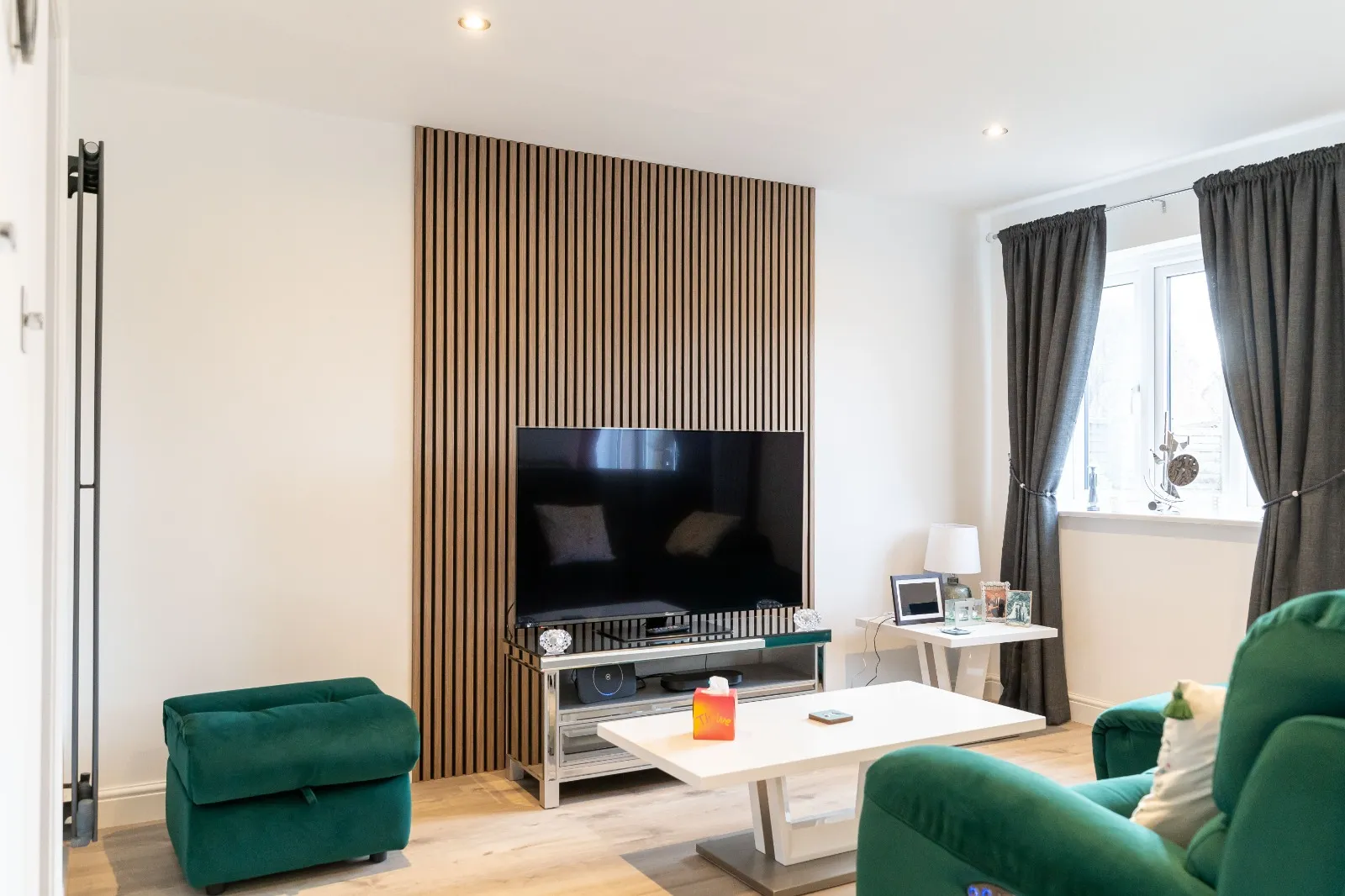
- Slatted or acoustic panels: vertical slats, often with felt backing.
- Picture frame mouldings: applied mouldings for a period look.
Choosing a height
Half-height panelling with a dado rail protects hallway walls from bags and bikes. Taller panelling, around two thirds of the wall, gives a more dramatic look. Full-height panelling suits bedrooms behind beds or dining rooms. Keep proportions in mind: panel sizes and heights should suit the ceiling height and the room.
Materials
MDF is stable, smooth and paints well, which makes it the most common choice for painted panelling. Moisture-resistant MDF suits kitchens and bathrooms away from direct water. Timber, such as pine or oak, suits tongue and groove or stained finishes. Bathrooms near showers need waterproof panels.
Preparing the wall
Walls should be sound and dry. Uneven walls need panels fitted on battens or a backing board so the finish is flat, or careful scribing to follow the wall. Check for damp first, as panelling can hide problems and trap moisture.
Sockets, switches and radiators
Sockets and switches need to be brought forward to sit flush on the panelling, which usually involves extension boxes or repositioning. Electrical work should be done by a qualified electrician. Radiators may need removing and refitting on longer brackets or new valves.
Stairs and hallways
Panelling up a staircase needs careful setting out so panels follow the stair angle. Hallways benefit from tough, wipeable finishes. Matching the panelling with skirting and architrave makes the whole hallway look cohesive.
How it is fitted
A typical fitting process includes:
- Planning the layout and panel spacing on the wall.
- Fitting battens or backing boards if needed.
- Fixing panels or mouldings with adhesive and fixings.
- Scribing to ceilings, floors and corners.
- Filling joints and fixing holes, sanding and caulking.
- Priming and painting.
Finishing
Good painting is what makes panelling look high quality. Joints must be filled and sanded, caulk applied neatly and paint laid on smoothly. Satin or eggshell finishes are durable and easy to clean. Dark colours are popular for dramatic rooms; light colours suit smaller spaces.
Period homes
In older houses, panelling should suit the period. Picture frame mouldings and traditional wainscoting fit Victorian and Edwardian homes; simpler shaker styles suit 1930s and later. Original panelling should be repaired rather than replaced where possible. Our period property guide covers more.
DIY or a carpenter?
Simple panelling kits can be DIY projects on flat walls. Uneven walls, stairs, period mouldings and lots of sockets are best left to a carpenter for a crisp finish.
What affects the cost
Factors include the area, style, material, wall preparation, scribing, sockets and switches, radiator changes, painting, and stairs or awkward shapes.
Where panelling works best
Hallways and stairs are the most common choice, because panelling protects the lower wall from scuffs and adds interest to a space you walk through every day. Dining rooms suit traditional wainscoting or shaker panels with a darker colour below and lighter above. In bedrooms, a full-height panelled wall behind the bed acts as a headboard feature. Home offices benefit from slatted acoustic panels that soften sound on video calls. Downstairs cloakrooms and utility rooms suit tongue and groove with a moisture-resistant finish. Choosing one or two places rather than panelling every room usually gives a stronger result.
Combining panelling with storage
Panelling can hide storage. Concealed doors set into the panelled wall, for example under the stairs or in a bedroom, make cupboards almost invisible. Shelves and ledges can be built into the dado rail. Planning these at the design stage keeps the panel lines consistent.
Mistakes to avoid
Avoid panelling over damp walls, ignoring uneven walls, getting proportions wrong, forgetting sockets and radiators, and rushing the painting.
Frequently asked questions
- What is the best material for wall panelling?
- Painted MDF is the most common, as it is stable and paints well. Timber and moisture-resistant boards suit specific rooms.
- Can panelling go on uneven walls?
- Yes, with battens or backing boards and scribing to follow the wall.
- Can I put panelling in a bathroom?
- Yes, using moisture-resistant or waterproof materials depending on how close it is to water.
- How high should wall panelling be?
- Commonly half height or two thirds of the wall, but it depends on the room and ceiling height.
- Do sockets need moving for panelling?
- Usually they need bringing forward so they sit flush, which should be done by a qualified electrician.